Showing posts with label Star Wars. Show all posts

Thursday, October 2, 2014

The Resurrection of the Religious Film

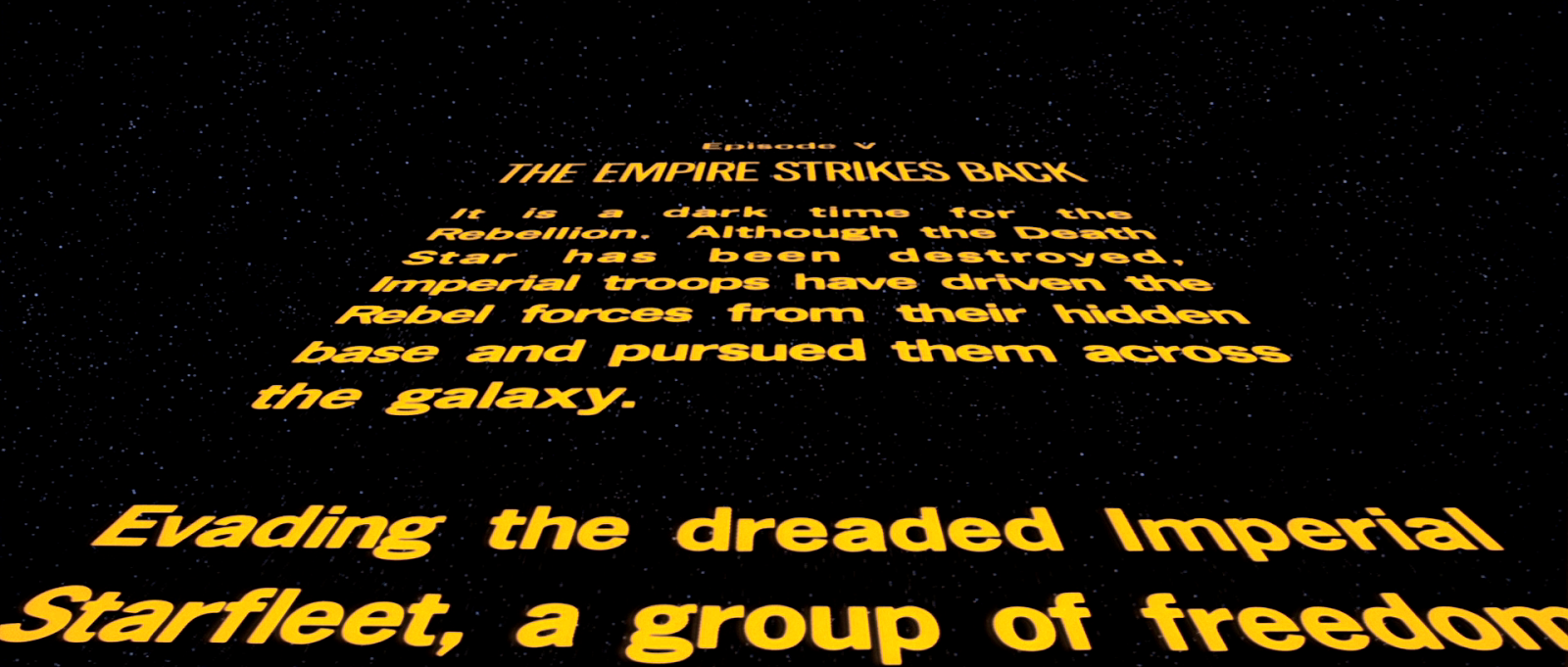
            In Sacred Matters, Laderman discusses the prominence of religious themes and imagery in all kinds of mainstream films. As seen in class, even movies that seem secular often contain some sort of religious or divine imagery, which occur as early as a studio logo during the opening credits. For example, we examined the motif of a pan down from the cosmos to the actual story in Star Wars. While this is an example of a religious image, there are also deeper religious themes throughout the movie. The most obvious seems to be the idea of “The Force”, which is some sort of spiritual power that permeates the universe. Sayings such as “May the force be with you” and the zealous belief that the force will make things right are strikingly similar to the role of God in Judeo-Christian religious stories. The broad idea of the “light side” versus the “dark side” is similar to the battle between good and evil, and more specifically God and the Devil. Even further, the lure of “the power of the dark side” that Darth Vader and the Emperor continually try to push onto Luke Skywalker is reminiscent of the snake in the Garden of Eden. Underlying themes such as these can be seen in countless Hollywood films, including Disney as Laderman discusses. However, currently there is an interesting trend in popularity for openly religious mainstream films.

            Recently, there has been an increase in (blatantly) religious Hollywood movies. For example, in March Darren Aronofsky’s Noah opened number one in the box office and globally was a booming financial success. Future movies such as Exodus (based on the story of Moses), and Mary, Mother of Christ further illustrate this shift from overtly religious films traditionally being independent productions to big budget Hollywood movies. It is interesting to consider why, in the face of rising secularism, religious movies are becoming more mainstream. Is this reactionary to this rising secularism, or are we as a society simply enthralled with traditional religious stories regardless of belief?

Myths in Movies


Myths are, among other things, stories based on real life events that are extended, enlarged, engorged, and riffed on as they are retold…” (Plate, 4). Myths don’t become myths for no reason. These stories have meanings and lessons that were relevant thousands of years ago when they were told, and will be relevant even today and in the future. For this reason, they will be told in many different forms – as oral stories, movies, television shows, and even in books. However, through all of this retelling, stories can be lost in translation. The main events of the story can be changed while the meaning and moral will remain the same. If a story is retold so many times by so many different people and in all these different ways, then change will occur. Also, the film industry has used mythologies in order to create some of the most popular films in history, including Star Wars, The Matrix, and many others. These films stand out because of the “ambiguity provided in its setting” (Plate, 9). In many films, the introduction will start in the sky, and it will lead to a more realistic and relatable setting. This can be considered a cosmogony because it deals with the chaos of outer space and the cosmos of the real world. Films like Star Wars use mythologies to create an entire following, and even though myths change during their retelling, it is for the better because it makes them more relatable to society today. 


Film and its religious-like following

As was discussed in this week's readings, audio-visual forms of media constantly tell and retell myths, much like religion. Some myths are overtly religious such as the 2014 film, Noah, and others are religiously suggestive, but not as blatant, such as Charlotte’s Web. There have been a wide ranger of biblical retellings in film, take Noah and Evan Almighty. The stories in films draw on characteristics of stories from religion. The dichotomy between good and evil, right and wrong, is a religious characteristic that films often include.


Films themselves can take on a religious quality in the way people so faithfully watch and anticipate them. For instance, viewers of Star Wars, Harry Potter, Lord of the Rings, and many more classic film series faithfully watch these movies. Much like characters in religious myths, people adore on-screen characters as well. Activities surrounding films such as these mimic activities around religion. When a new movie in a series opens, fans flock to theaters much like a Christian goes to church on Easter, or a Jew to synagogue on the High Holidays. Additionally, consider tattoos. Perhaps some of the most commonly seen tattoos are religious symbols such as crosses. People also get tattoos related to their favorite characters or moments from films. In most cases, when someone gets a tattoo, there is a deeply rooted significance as to why that person wanted that on their body. The fact that cinematic elements make the cut for many people demonstrates the religious-like following they often have.

Film: Where Light Pierces Darkness

"And so they are linked, cinema and religion, two grand designs conjuring light out of darkness"
- John Updike

Gandalf fights Balrog

Religions are meant to give people out of body experiences that connect with the soul and give new light and life to every day experiences. In a similar way, films take people from their daily schedules and transform the world around them into a fantasy of color, sounds, and movements. Many films even take the next step and find ways to subtly, or blatantly, alter myths that people know to fit their own purposes.


Whether it be the slow downwards pan from the cosmos to the real in Star Wars, echoing the beginning of the world according to Genesis, or the death of Gandalf after fighting the Balrog, quite literally a demon of fire, and his resurrection shortly after, mirroring Jesus' death and resurrection, films find ways to give moviegoers a new take on religion. Like religions, they take people out of the physical realm and put them into the metaphysical, where light conquers darkness and the most unlikely of characters save the day.

Anakin Skywalker and Jesus


        Films often rely on biblical stories to help tell their plot. Many times films adapt commonly known myths into their stories. A great example of this is with Star Wars and their use of the story of Jesus. In the prequel trilogy, Anakin Skywalker (future Darth Vader) has many similarities to Jesus. First off is their births, as both were born without a father and have a mother who is central to their development. Both have foreign men arrive and anoint them as special (three wise men and Qui-Gon Jinn). Anakin is also known as the “Chosen One” and he is supposed to bring “balance to the Force.” Of course, Anakin gets corrupted and falls to the Dark Side until the end of Episode 6 where he sacrifices himself to kill the Emperor and bring down evil (bringing peace to the cosmos/galaxy). Anakin is a major example of how movies adapt religious stories. He also is a good example of the continuous fight between the cosmos and chaos, and how myth must tread the line between good and evil. The analogy of Anakin to Jesus has helped Star Wars have such a religious following with Darth Vader being one of the most popular characters that fans dress up as. A major question for filmmakers is about how close can they make their stories resemble biblical stories, or do they always have to slightly change the story before they can put it into the film? Also, is it a necessity for filmmakers to have some type of religious connotations in their films?