Showing posts with label Identity. Show all posts

Thursday, December 11, 2014

Branding Identity

            The film, “Generation Like,” illustrates how social media and celebrities function religiously. In a media obsessed society, communities are formed online among individuals in the same fan base of films, television, or music. People gain celebrity and icon status when they accumulate a following, like Tyler Oakley after making his own YouTube videos. The film interviews different kids that have gained recognition through social media. One girl, a hunger games fanatic, says that gaining followers and status on social media has given her a sense of empowerment.

The kids depicted in the film had a false sense of empowerment. Their actions were conforming to what they believe will give them the most attention or validation, and thus they are stripped of their identities. Their new identities are created by obsessions they have or the brands they are promoting. Mara Einstein mentions that “scholars and social critics also clearly identify commercial culture as the source of identity creation.” This is evident with Steven Fernandez, who becomes a walking advertisement for the skating companies that support him. With fame Steven Fernandez transformed into “Baby Scumbag.” After his transformation, Steven no longer makes videos to show his skateboarding skills, but rather to gain attention and views on YouTube. The desire for attention and support from sponsors pushed Steven to create videos with sexualized women and guns, ultimately leaving behind his adolescence. 

Wednesday, December 10, 2014

Social Media and Marketing: Identity Lost or Found?

Both Frontline's documentary "Generation Like" and Eintstein's article Branding Faith look at the various identities and falsities formed through commercial culture and social media. Much of the readings speak to the more negative sides of this modern-day marketing strategy, specifically noting that big box companies take advantage of human desire to be powerful, unique, and socially accepted. To play devil's advocate for a moment, however, I pose the question: does labeling really take away and re-shape our personal identities or vice-a-vera? Is it possible that it is our identities that shape the commercial world? Each person (often teenagers) participating in social media or targeted by advertisers already have a determined personality and products/activites that interest them. Through the personal information they provide, companies offer them a platform to publicly expand and promote that identity. The transition from demographic targeting to "psychographics" that Einstein mentions makes this idea even more true as companies aren't as much forcing certain products and idetnties on specific age groups, but rather allowing an individiual's beliefs and attitudes to dictate the identities that define them. Yes, labels are everywhere and it says somethig about our generation that when I'm babysitting the favorite game is Logo Quiz. But again, each child's identity is evident in the labels they recognize. The boy I babysit that is a sport's fanatic is able to identify ESPN and Dunlop, but he has to go to his science crazed brother for help on computer program labels. Similarly, when I am doing my homework I am constantly distracted by advertisements to Steve Madden Boots of Club Monaco coats because I chose to search those brands in my free time, while I'm sure other students in this room are target for topics that better suit them. Labeling doesn't necessarily re-define someone it just expands on what was already there, yet, this can get out of hand quickly.

As demonstrated in the case of Helen or Tyler Oakley, it is so easy to get swept up in life behind a screen, allowing all of your social interactions to become impersonal and finding solace in a community of cyber-strangers and product endorsements. For Helen and Tyler, their core personalities and identities were at first elevated by social media, but soon became overshadowed so that they now appear in-authentic. Tyler Oakley found a place where his passion for One Direction (perhaps a representation of the larger issues, his sexuality)was not only accepted, but celebrated. Now he celebrates the Cool Ranch Dorito Taco. Danielle built a fan  base for her music career, but is now a 14 year old model showing more skin than is age appropriate. Marketing and social media has its advantagous and disadvantages. It can be dangerous when participants loose sight of the fact that they are vulnerable and are being used as a tool. Similarly religion began and has continued to escalate as a form of advertisement. Many believe the bible began as an advertising for everyone to follow a certain moral code. Missionaries spread that word around the world and now religious advertisement has expanded to mega churches, billboards, and TV adds. Both social media and religion have the potential to help people find themselves and a larger community they can relate to. Yet as the power associated with these resources increases, is it easy to loose sight of this original intention.

Saturday, December 6, 2014

Sports and Religion

“I've tried 'em all, I really have, and the only church that truly feeds the soul, day in, day out, is the Church of Baseball.” (“Bull Durham”, 1988)
Sports fans are more than just spectators; they are active participants in the religion of sports. For fans and athletes alike, sports provide a fulfilling sense of identity and community through its rituals, symbols, and relics.

Years ago, my family set out on a road trip to see every Major League Baseball Stadium in the country. Each stadium had a unique vibe and they each had their own traditions. The Anaheim Angels have stuffed “rally monkeys” that the fans hold up and shake when they cheer. The Phoenix diamondbacks have rattlesnake shaped rattles that the fans shake to make noise and distract the other team. Entering the stadium was like entering a whole different realm. The outside world ceases to exist and all that matters are the two teams about to play each other. The ritual of games is like a break from the monotony of everyday life; it’s when the end of the circle of routine veers out to become an enriching spiral.

 There’s something special about going to see a game rather than watching one on TV. Both rituals have distinct characteristics and superstitions. I like to think of watching a game on TV to be like a prayer group, whereas going to a game is like going to a religious service. Sports are the organized religion to correspond with the human need for play. Sports allow for play to remain present in your life past the age where play stops being socially acceptable.

Sports are a neutral zone. We create rules and narratives in attempts to make it all fair. In theory, the team with the most skill and the best technique should always win. But because of chance occurrences and weird coincidences, that is not always the case. Sometimes the wind blows too strongly in one direction or someone accidentally trips, but we chalk these unpredictable events up to result of superstitions. If we do not wear the right socks on game day or watch the game with the right people, everything will fall apart and our team will lose. In these superstitions, we create mythologies and stronger connections to our teams and our favorite athletes.

In 2006, Johnny Damon was traded from the Boston Red Sox to the New York Yankees. When he was on the Red Sox, he was known for his rugged look, but when he switched to the Yankees they made him clean up. My friend’s dad was the one who cut Damon’s trademark hair off, and to this day my friend has a box of Johnny Damon’s hair. That box of old hair is much more than just that, though. That hair is a relic; a myth; a symbol.

Thursday, September 25, 2014

Clothing As Identifiers

Clothing as an identifier has predated most academic writing on it. In Alison Lurie's piece she touches upon the societal implications of clothing. Lurie goes through the history of clothing as a social divider. In 2014, this fact has not changed. However, despite this lasting trend, we currently have the most clothing autonomy in human history. How we chose to use that freedom is more paramount today than ever before. Clothes are not simply a reflection of what you are, as they have been in the past, but a social indicator of what you want the world to see you as.


Clothing allows people to show more of their personality that ever before. As Lurie suggests, something as simple as color pattern relays personality. The "language of colors" as Lurie argues is vital in understanding oneself and perceiving the world. Conservative colors, such as those seen in religious communities and even in business, highlight the importance of visual appearance. Clothing signals more than it ever has in human history, complicating identification and classification.

Visual Identity

382040d06c64f78dbc23e98c28ace229.jpg

Does clothing truly reveal our identity? In today’s world, as Alison Lurie argues, clothing reveals a lot about the sex, age and socio-economic status of an individual. The things we wear act as a language that communicates to the rest of the world some information about ourselves. When a woman wears a hijab, we identify her as a conservative Muslim who is obliged to fully cover her face and her body from the eyes of the strangers. Moreover, the hijab makes Muslim women seem oppressed and shy to western societies.

As Shabana Mir argues in her article, it is unfair to make such statements because it creates false stereotypes. The wearing of the hijab is not an essential part of Islam. Just because a woman wears the hijab, it does not mean that she is subjugated or timid. I’m not sure if this is the case at Hamilton, but there are plenty of Muslim women like Latifa on other campuses, that wear the hijab and are sociable and broad-minded. One of my friends at Hamilton does not wear the hijab and is not identified by the majority as a Muslim because she dresses and acts “normally”. Therefore, the form of identity that is suggested by clothing can be deceiving in many ways. On one hand, clothing does reveal the sex, age and socio-economic status of an individual, but on the other, it doesn’t fully reveal his or her character. What is shown on the outside is just a visual identity, an abridged projection of our individuality to the outer world.

Being Jewish on Campus


With today being Rosh Hashanah (the Jewish New Year) and the start of the holiest days of Judaism, it only makes sense to look at how Jews are identified on campus. For the most part, Jewish students wear very similar clothing as most other students on campus except on Jewish holidays such as the Sabbath. During these holidays , many Jewish students dress up in very nice clothing and walk to either the Chapel or more likely, the Azel Backus House. The Jewish students are not identified as "different" through their clothing, though the clothing they wear  is viewed by others as very formal (the language given off by the clothes). There is one major way in which some Jewish students are identified as "different." The major thing that separates Jewish students from others is the Sabbath where, for less religious students, there is a dinner while the more religious students do not do anything that contains effort (i.e. turning on a light). Some students are confused by these religious Jews not participating in the typical college experience in a similar way to how students at Georgetown and GW were confused by the Muslim students there. Jewish students are not identified as "different" often, as really the only time some are viewed as different is during the Sabbath.

Sending the Wrong Message,

Sending the Wrong Message


Luis Serota
    
     Alison Lurie makes a powerful statement at the end of the first chapter of The Language of Clothes, "By the time we meet and converse we have already spoken to each other in an older and more universal language." Here, Lurie is claiming that our dress immediately imparts an in-depth narrative of ourselves and our core identities unto anyone that happens to look our way for even an instant; whether it be our socio-economic status, religious beliefs and commitment level to those beliefs, or any other passion that might define us.
     While Lurie is predominantly correct in her claim that our clothes are unspoken, but rather comprehensive identifiers of who we are to those around us, she fails to point out a fundamental flaw in this form of non-verbal communication that Shabana Mir highlights in her talk and book. Specifically in the case of Muslim Women on modern American college campuses, Mir calls attention to the fact that other individuals, when "conversing" with" these Muslim Women in the language of their clothes, totally overlook the rest of these womens' personal identities due to being clouded by the traditional Hijabis that they don, and instead solely associate them with Islam. These miscommunications lead to unfortunate misnomers; the rest of these women's diverse, unique, and compelling identities are sacrificed in the eyes of the "normal" American college students around them at the cost of wearing Hijabis.
     How can we combat these unfortunate miscommunications in Lurie's innate language of clothing elicited by Mir? These unmerited social judgements are likely caused by the innate human response to react uncomfortably, or cautiously, to what we don't see as "normal" by our standards, acting as a defense mechanism to create social-separation from these things. How can we eliminate these barriers, and perceive everything as "normal?"
   Recently, an old friend of mine published a mini-documentary on the power of engaging in "Big-Talk" with strangers as opposed to the purposeless small talk we would normally engage in with people we are uncomfortable with. In the context of the Hamilton College Campus, or really in any community large or small, I believe engaging in more meaningful conversations with strangers has the ability to overlook the normal judgements we would normally pass them solely based on the language of their clothes. In the video, Kalina asks strangers deep and personal questions like, "what do you want to do before you die?" The response she gets from these people are far more telling of their identities than any religious ornaments, designer clothing, or lack thereof might impart.


Wednesday, September 10, 2014

What Makes a Religion "Legitimate?"

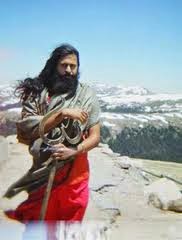
             While discussing the film Kumaré, our class explored the ways in which a religion becomes “legitimate.” We designated religious symbols, the leader’s physical appearance, a sizable following, and several other elements as legitimizing factors. Similarly, after our viewing of Seinfeld’s “Festivus” episode, we discussed how the aluminum pole and the airing of grievances seem to “make the festival real.” While all of these elements exist within legitimate, authentic religious institutions, they do not directly designate “legitimacy” or “authenticity.” I find that legitimacy has two sides: the ability to be recognized and the ability to perform. The elements we designated as “legitimizing” are all visual stimuli through which a religion can be recognized; they imply a religion’s successful performance, but do not, themselves, perform religious work. Authenticity does not pertain to a religion’s symbols or rituals or number of followers, but instead refers to the system’s ability to provide an individual with what mankind searches for in religion; a sense of community, identity, and purpose. Kumaré’s staff and the airing of grievances do not inspire a sense of community or belonging, but rather represent the values and beliefs that satisfy an individual’s religious cravings. Thus, legitimacy lies in the combination of the tangible and sensational elements of religion and the successful impact on an individual that these elements represent.